
Rebuilding a Boat Deck in Sapele Mahogany (CNC)
Field: Marine joinery / CNC fabrication / Boat restoration
Period: 2017
Client: Personal project (Kranchi boat)
Status: Completed — in service
Background
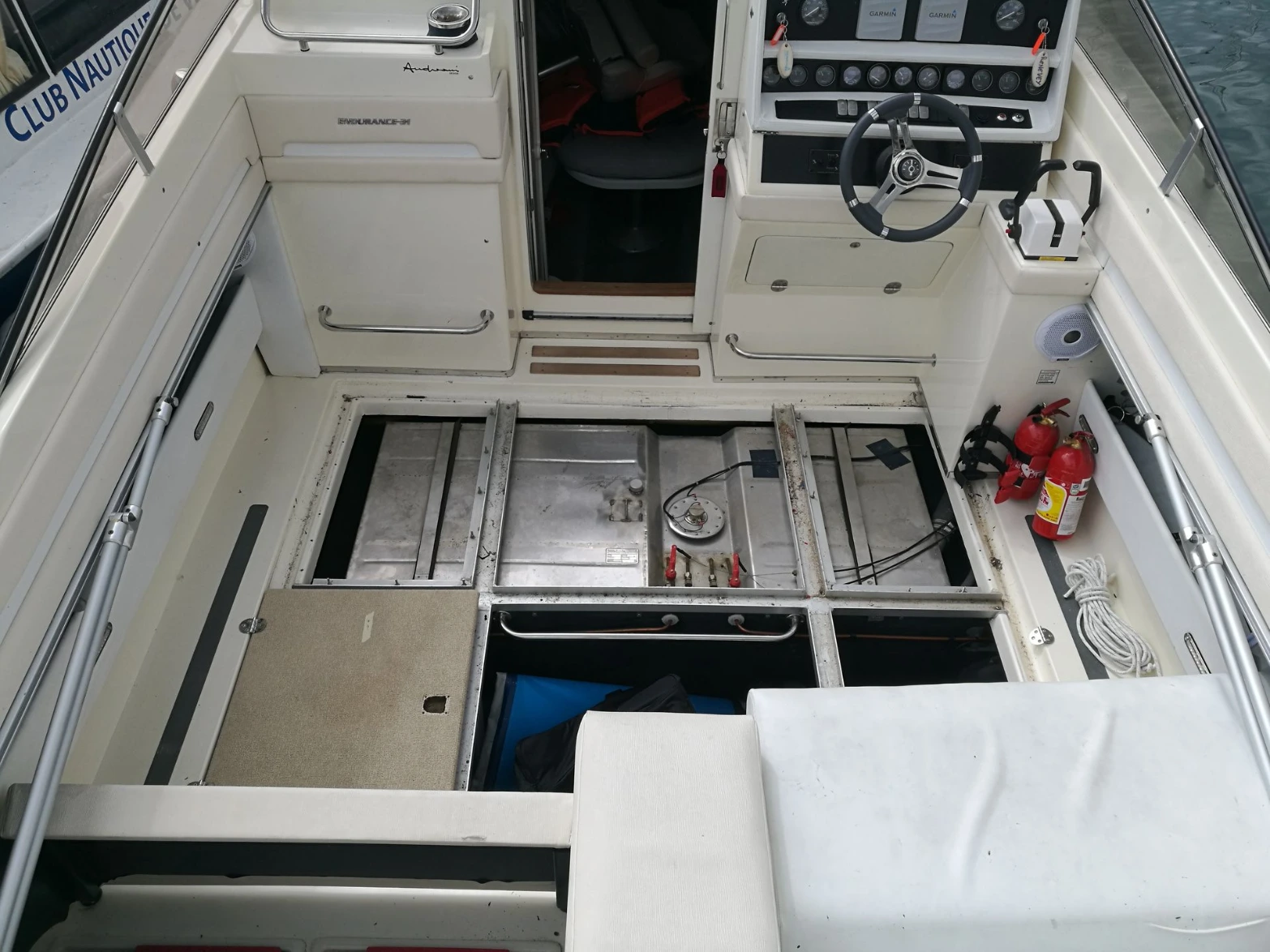
In 2017, the deck of my Kranchi boat (original fibreglass floor) was completely rotten — cracks, delamination, water ingress. Repair was out of the question: it had to be rebuilt from scratch.
Goal: Replace the fibreglass deck with a solid wood deck that is both attractive and resistant to the marine environment, using CNC for precision and finish quality.
Problem
Technical challenge:
- Original fibreglass deck: complex geometry, curves, precise cut-outs for seats, table bases and hatches
- Wood species: find a timber suited to the marine environment (resistant to salt water, UV and humidity)
- Marine finish: a treatment that lasts without excessive maintenance
- Precision: cut-outs, grooves and decorative patterns (compass rose) with tight tolerances
Design challenge:
- Reproduce the geometry of the existing deck
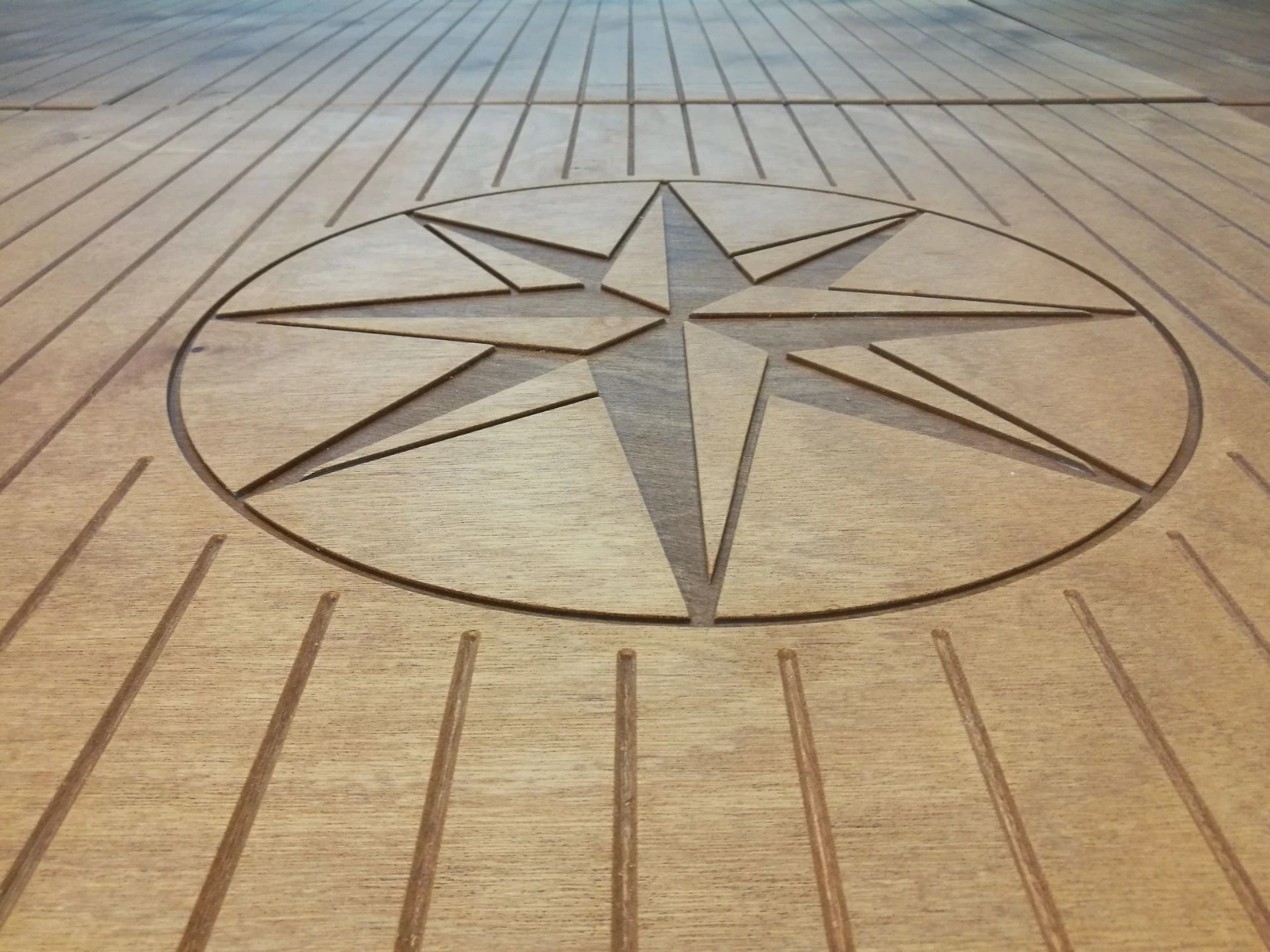
- Integrate a decorative motif (engraved compass rose)
- Anti-slip grooves (marine teak style)
- Precise cut-outs for fittings, hatches and bases
Solution
Phase 1: Choosing the material
Species chosen: Sapele mahogany
Why?
- Marine resistance: excellent performance in humid and salty conditions
- Dimensional stability: little movement with changes in humidity
- Appearance: fine grain, warm colour (reddish brown)
- Durability: class 2 timber (natural resistance to fungi and insects)
Treatment: Marine oil
- Penetrates the wood (no surface film to peel)
- UV protection + water repellent
- Easy maintenance (re-oil once a year)
- Natural matt finish
Phase 2: Design & CAD
Survey of the existing deck:
- Accurate measurement of every cut-out
- Tracing of the curves and complex geometry
- Locating seats, bases, hatches and fittings
Complete CAD drawing:
- 3D model of the deck
- Integration of the compass rose motif (central engraving)
- Anti-slip grooves (evenly spaced, teak style)
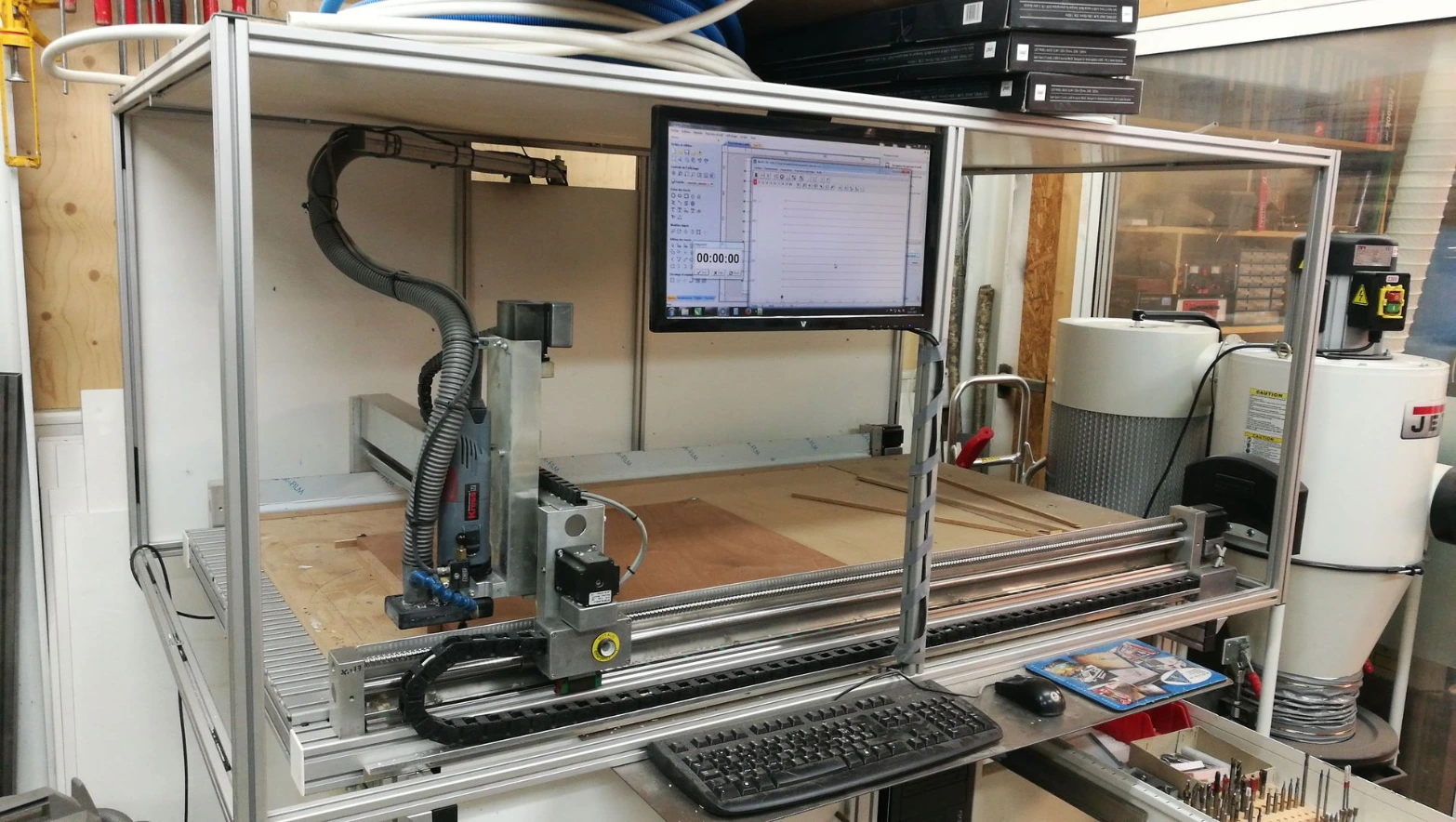
- Optimised CNC toolpaths
Phase 3: CNC fabrication
Operations carried out:
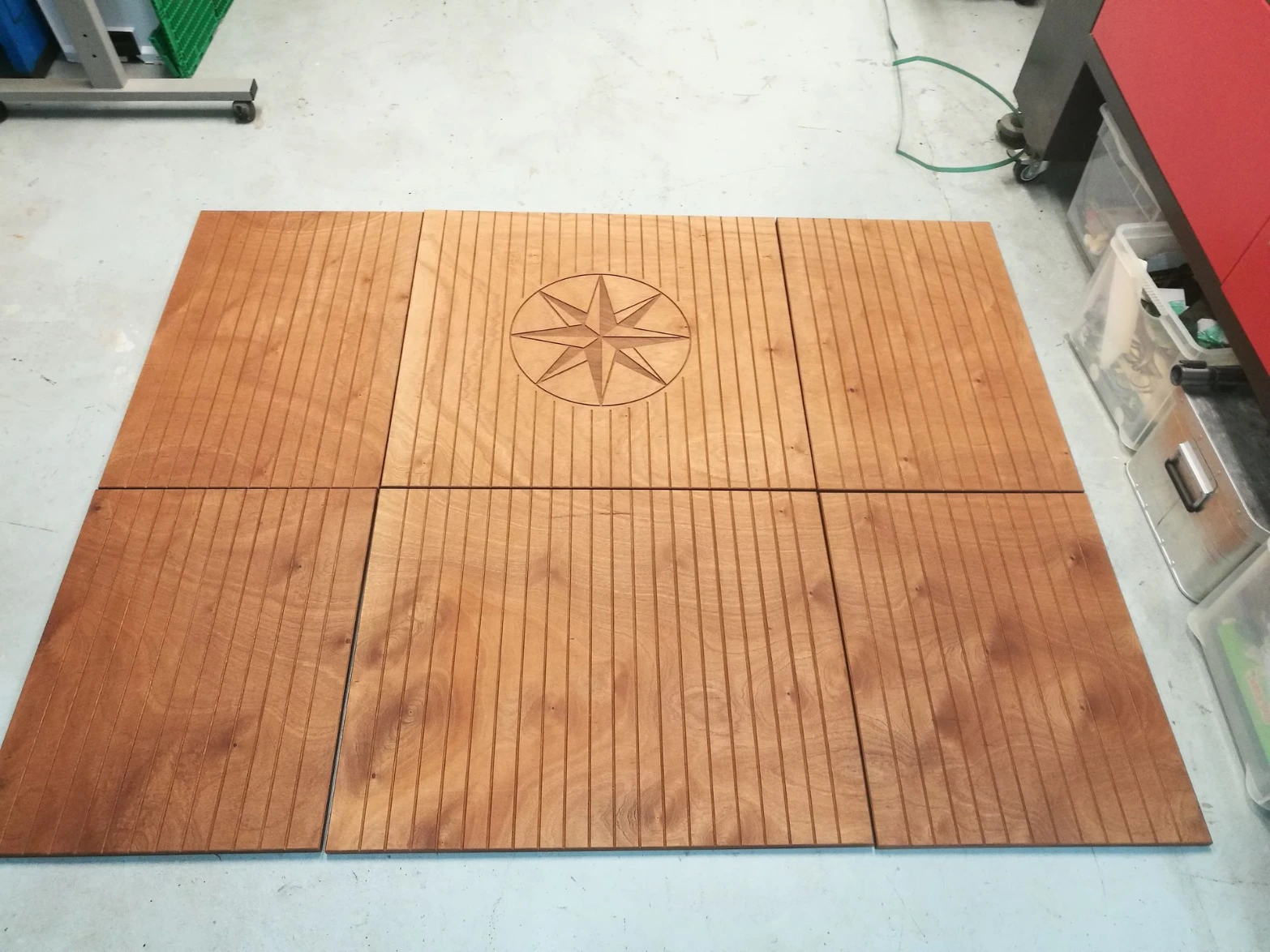
1. Cutting the boards
- Sapele mahogany ripped into boards of suitable width
- CNC cutting of the outer shapes (deck geometry)
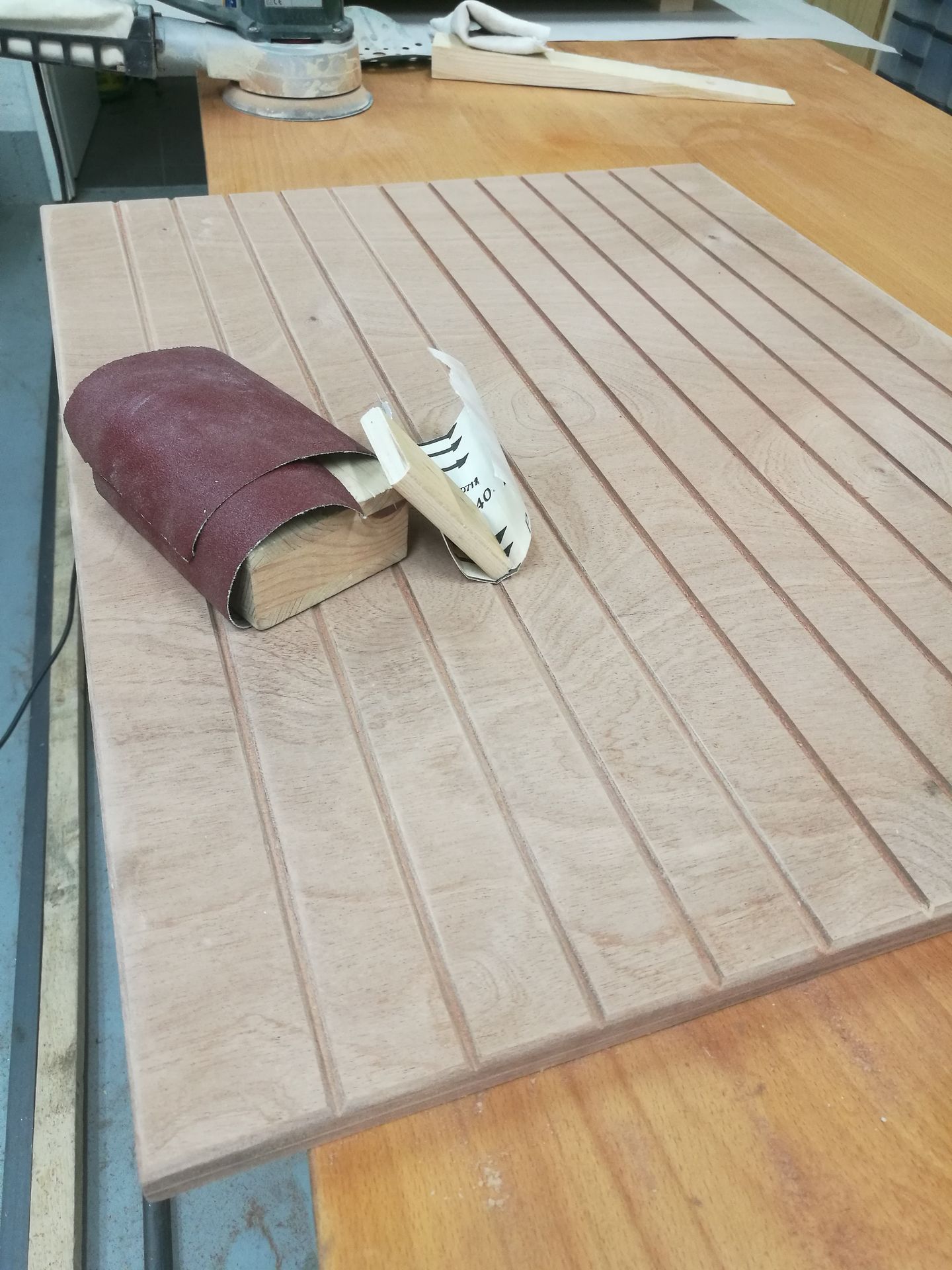
2. Grooving
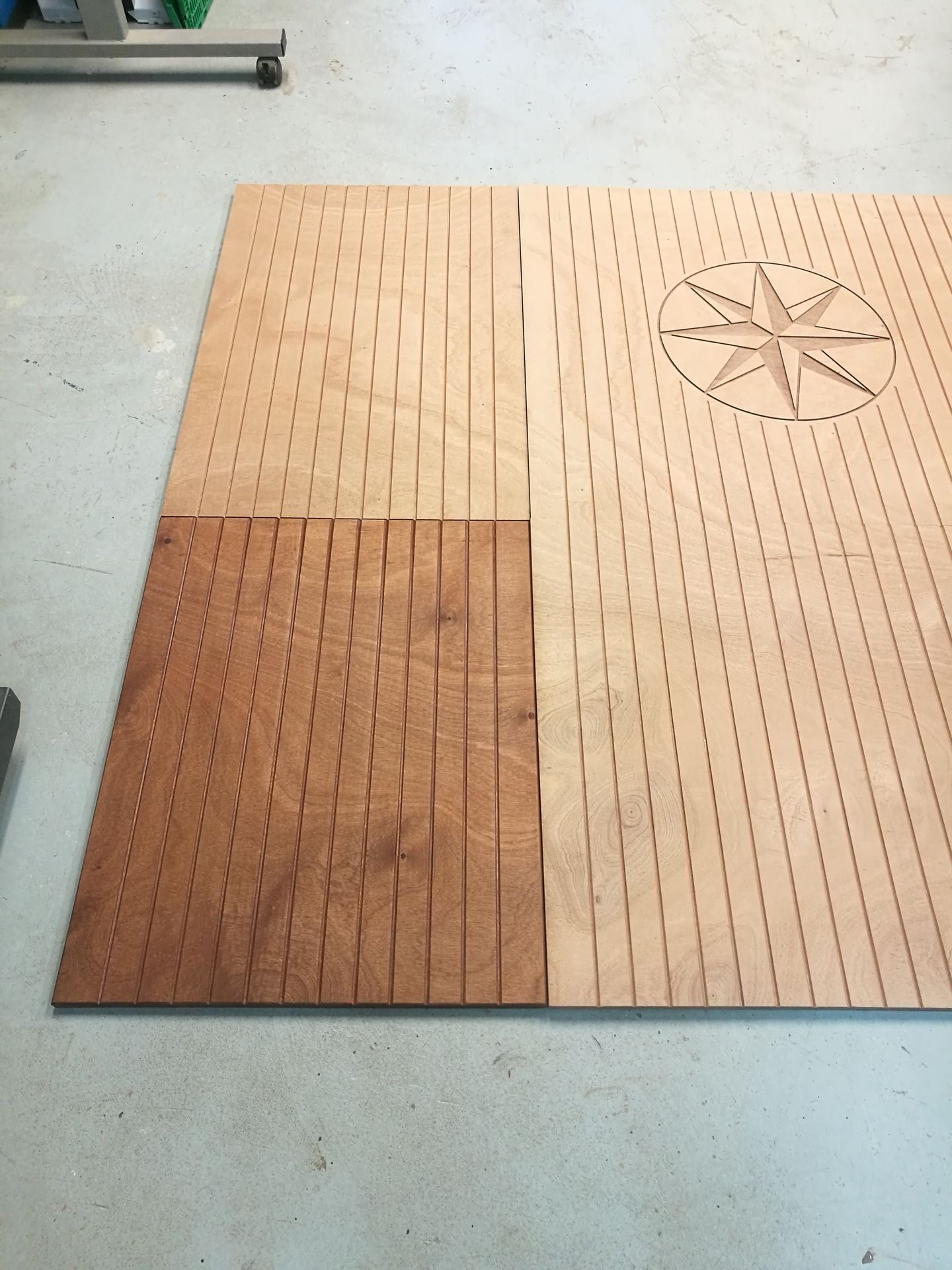
- CNC-machined anti-slip grooves
- Even spacing (classic teak deck style)
- Controlled depth for water drainage
3. Engraving the compass rose
- CNC-engraved central motif
- Controlled depth for relief
- Fine detail (star points, circles)
4. Specific cut-outs
- Seat positions (round cut-outs for swivel bases)
- Hatches (access to compartments)
- Fittings (flush screws)
5. Assembly
- Boards fixed to the underlying structure
- Invisible joints
- Perfectly flush finish
Phase 4: Finishing
Marine oil treatment:
- Fine-grit sanding (up to 220)
- Application of marine oil (2-3 coats)
- Drying between coats
- Natural matt finish
Result
Deliverable:
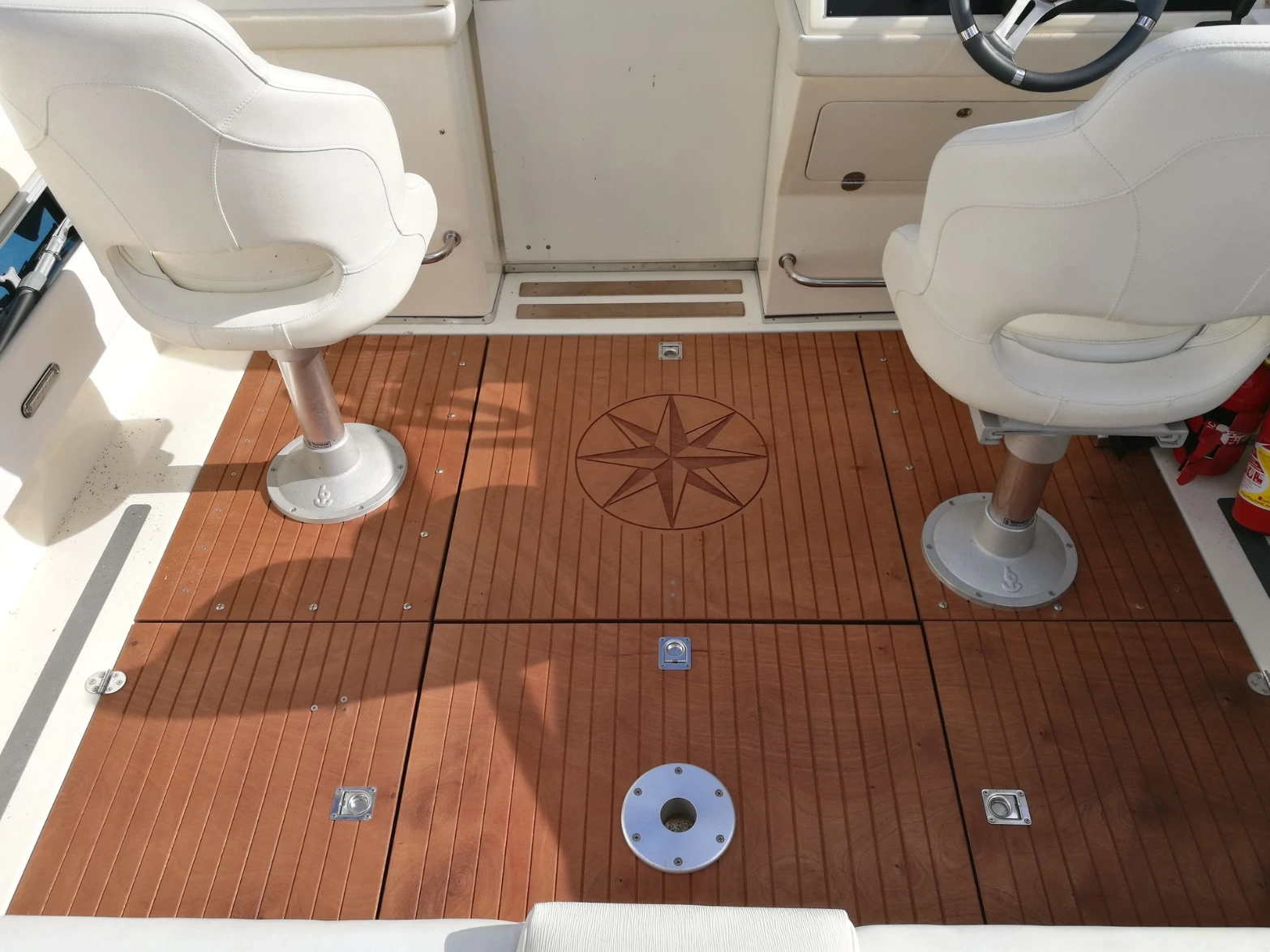
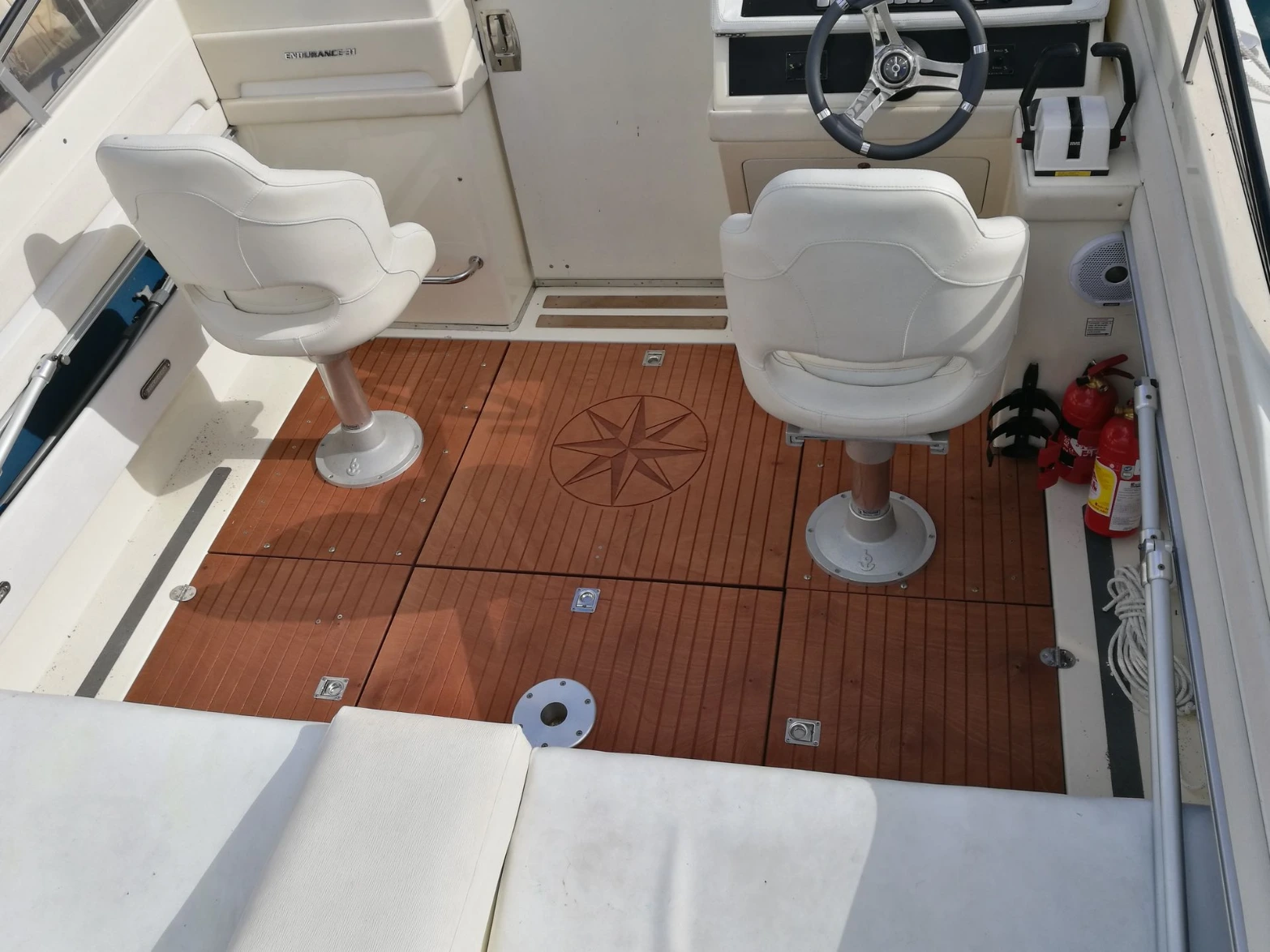
- Boat deck entirely rebuilt in Sapele mahogany
- Total surface: [Kranchi deck dimensions]
- CNC anti-slip grooves
- Central engraved compass rose
- Precise cut-outs (seats, hatches, bases)
- Marine oil finish
Impact:
- Premium look: natural solid wood deck vs. the original fibreglass
- Marine resistance: Sapele mahogany suited to salt water
- CNC precision: flawless cut-outs and grooves
- Durability: still in service after 8 years (2017-2025)
- Easy maintenance: a yearly re-oiling is enough
This project demonstrates:
- The ability to restore a boat (complete deck)
- Command of CNC for marine joinery: cutting, grooving, engraving
- Selection of materials suited to the context (Sapele mahogany for a marine environment)
- Aesthetics + engineering: engraved compass rose + function (anti-slip grooves)
- End-to-end project: CAD design, CNC fabrication, marine finish
Photos/Visuals
A design or engineering project?
From concept to working prototype: industrial design, custom fabrication, fit-out and acoustics. Let's talk about your project.
Tags: lab, marine joinery, CNC, Sapele mahogany, boat, boat restoration, engraving, 2017