
Open Source Home Automation & AI Infrastructure
Field: IT Infrastructure / Home Automation / Artificial Intelligence
Period: 2025 (current deployment)
Status: In production — daily personal use
Location: Playa del Carmen, Mexico
Background
In 2025, I designed and deployed a complete, 100% open source home automation and AI infrastructure for my home in Mexico. The goal: total autonomy, zero cloud dependency, absolute privacy, and intelligent control of the entire home environment.
This stack also serves as an R&D lab for my commercial developments (the professional home automation packs I offer to clients).
Problem
Technical challenges:
- Build a local home automation infrastructure (no Google/Amazon/Apple cloud)
- Integrate conversational AI for smart voice control
- Manage 30+ IoT devices (lights, plugs, air conditioners, sensors, front door)
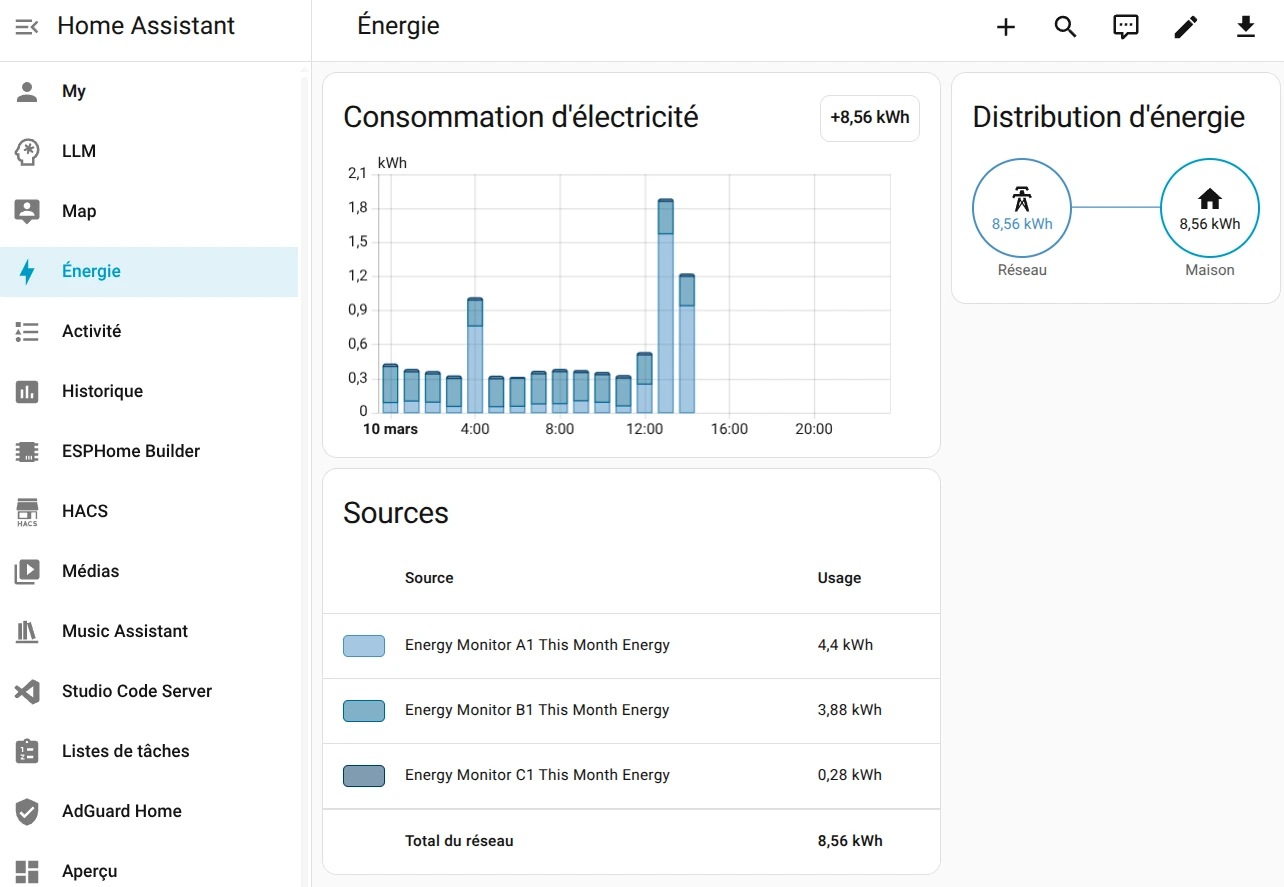
- Electrical monitoring: current sensors in the electrical panel to analyze consumption
- Network isolation: separate IoT, home LAN and servers
- Performance: voice recognition <2s, real-time automations
- Reliability: infrastructure running 24/7 with no intervention
Privacy challenges:
- Zero personal data in the cloud (no Google/Amazon surveillance)
- Local voice recognition (no external servers)
- Home automation data stays at home
Solution
Infrastructure Architecture
Hardware:
- Main server: 1 physical PC running Ubuntu 24.04 LTS (12-core AMD Ryzen)
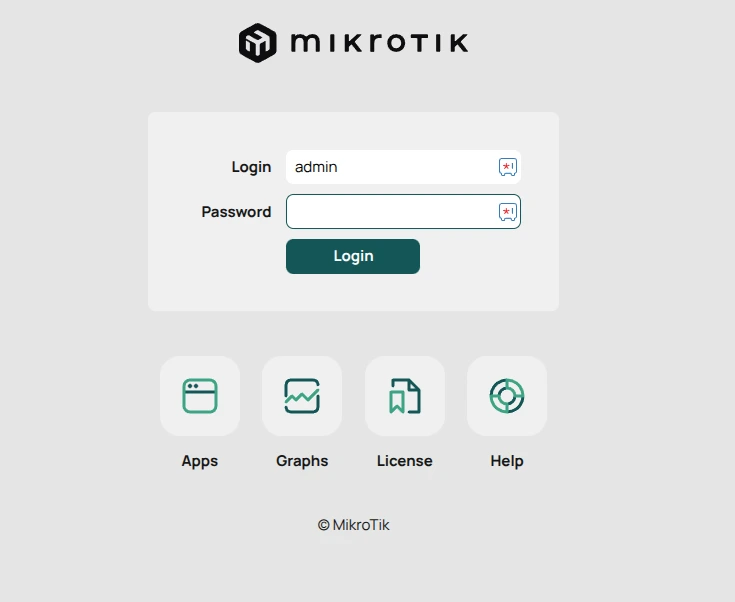
- Network: BPI-R4 OpenWrt router with VLANs (isolated IoT)
- Electrical monitoring: current sensors in the electrical panel
- Bluetooth Proxy: ESP32 (Squeezbox server for multi-room audio)
- Storage: 1TB NVMe
Software stack (all open source):
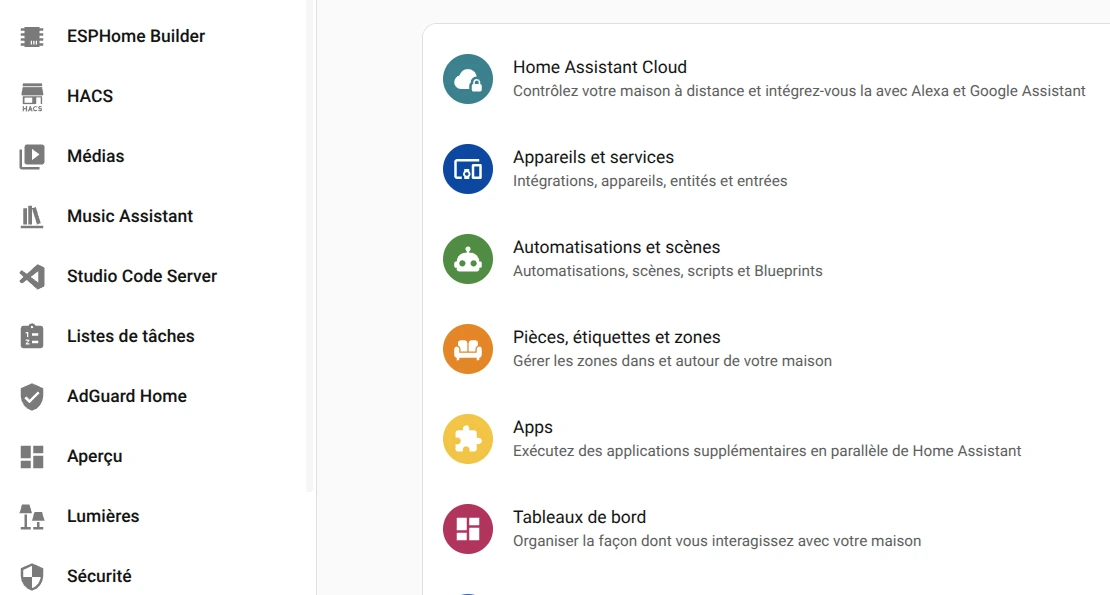
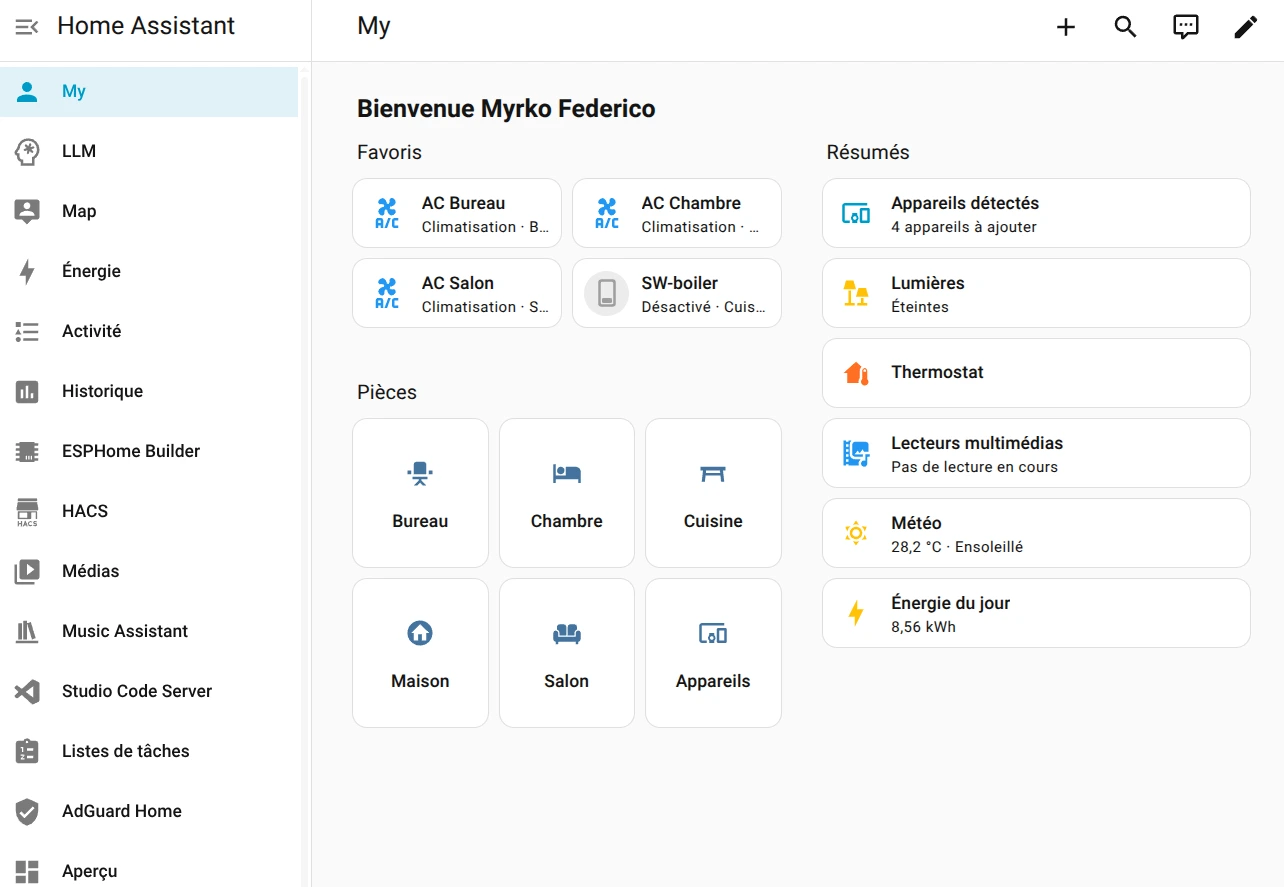
1. Home Assistant OS (KVM VM)
- Complete home automation orchestration
- 30+ devices integrated (Tuya/Zigbee/Z-Wave)
Controlled equipment:
- Air conditioners (4 units)
- Lights (15+ points)
- Front door (smart lock)
- Smart plugs
- Energy monitoring: current sensors in the electrical panel (real-time consumption analysis)
- Complex automations (multi-level conditions, multiple triggers)
- Unified web/mobile dashboard
- Local voice recognition: Whisper (STT) + Piper (TTS)
- Offline operation: automations keep running without internet
2. AdGuard Home (Docker)
- DNS blocking: ads, trackers and malware blocked network-wide
- Privacy: no external tracking
- Performance: fast local DNS resolution
- Automatic filtering of 100,000+ malicious domains
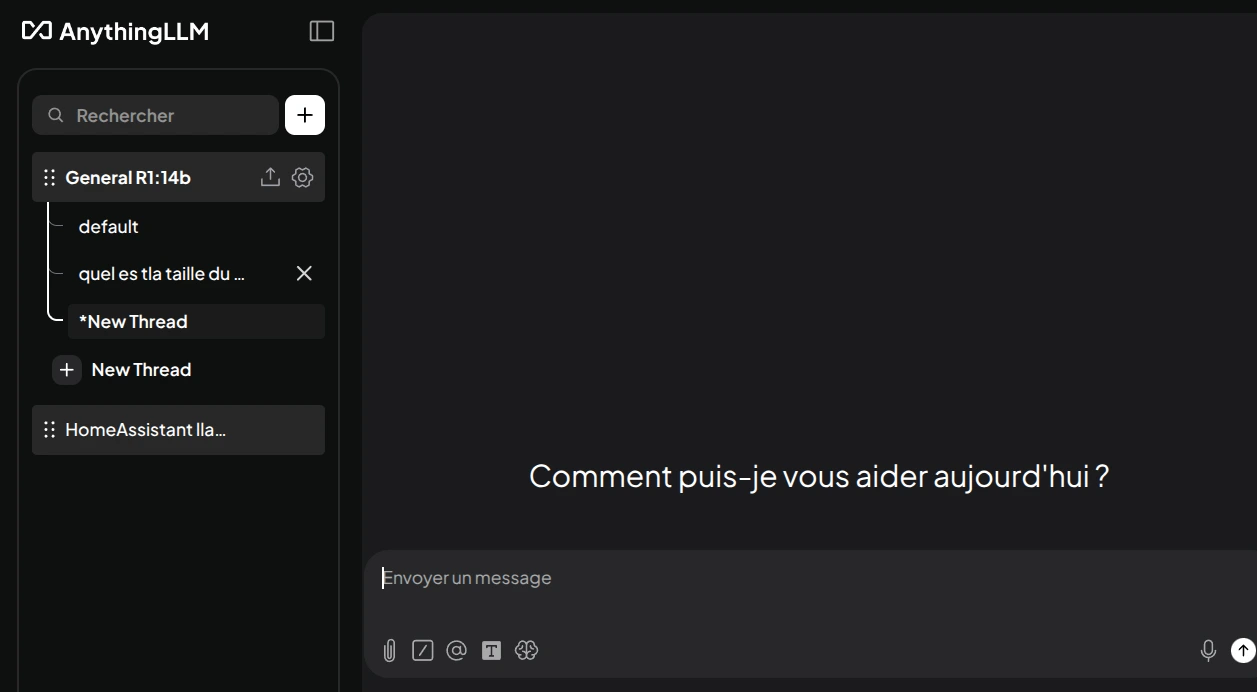
3. AnythingLLM (Docker)
- Conversational AI interface
- RAG (Retrieval-Augmented Generation) on local documents
- OpenAI API integration for complex reasoning
- Contextual memory: the assistant remembers our conversations
4. ESP32 Squeezbox Server (BT Proxy)
- Multi-room audio server
- Bluetooth proxy to integrate BT devices into Home Assistant
- Synchronized audio streaming
5. Isolated network (OpenWrt BPI-R4)
- 3 VLANs: home LAN (192.168.1.0/24), IoT (192.168.10.0/24), Servers
- WireGuard VPN: secure remote access
- QoS: traffic prioritization (streaming never stutters)
- Smart firewall: IoT fully isolated from the rest of the network
Technical Workflow
Smart voice recognition
Example interaction:
Me: "It's hot"
Assistant:
- Turns on the living room AC (24°C)
- Closes the front door (if open)
- Turns off unnecessary lights (energy saving)
- Starts a "chill" playlist on Squeezbox
Tech stack:
- Whisper (local STT): captures my voice → text (~800ms)
- ChatGPT API (reasoning): analyzes intent + context (~1-2s)
- Home Assistant: runs the automations (AC, door, lights, audio)
- Piper (local TTS): replies by voice (~400ms)
Total: ~2-3 seconds from voice command to execution.
Advanced home automations
Real-world examples:
Scenario 1: Smart electrical monitoring
- Current sensors in the electrical panel
IF consumption >80% of panel capacity THEN:
- Mobile notification "High electrical load"
- Automatically cuts non-priority devices
- Historical consumption log per circuit
Scenario 2: Adaptive thermal comfort
IF indoor temperature >28°C AND nobody home THEN:
- Turns on AC in eco mode (26°C)
- Turns off lights automatically
IF return home detected (front door opened) THEN:
- AC switches to comfort mode (24°C)
- Turns on entrance lights
Scenario 3: Security & savings
IF front door open >5 min AND person detected outside THEN:
- Mobile notification "Door open unusually long"
- Turns off AC (avoids waste)
IF door closed THEN:
- Restores AC to its last mode
PCIe Passthrough — Dedicated VM NIC
Technical challenge: Home Assistant needs direct access to the IoT network (VLAN 10) without going through the Ubuntu host.
Solution: PCIe passthrough of a physical network card (NIC2) directly into the Home Assistant VM.
Implementation:
- Enabling IOMMU (kernel)
- Binding NIC2 to the VFIO-PCI driver
- KVM VM with NIC2 in direct passthrough
- Result: the VM has direct hardware access = minimal network latency + perfect isolation
Results
Deployed infrastructure:
- Ubuntu 24.04 LTS server (12-core AMD)
- Home Assistant OS in a KVM VM (4GB RAM, 4 vCPUs)
- AdGuard Home + AnythingLLM in Docker
- ESP32 Squeezbox Server (BT Proxy + Audio)
- OpenWrt router with VLANs + VPN
- 30+ IoT devices controlled
- Real-time electrical monitoring (current sensors in the panel)
Active features:
- Local voice recognition <2s
- Air conditioning control (4 units)
- Lighting control (15+ points)
- Front door control (smart lock)
- Electrical consumption monitoring per circuit
- Multi-room audio (Squeezbox)
- Complex multi-condition automations
- Network-wide ad/tracker blocking
- Secure remote access (WireGuard VPN)
- Unified home automation dashboard
- Conversational artificial intelligence
Personal impact:
- Total autonomy: zero dependency on Google/Amazon/Apple
- Absolute privacy: my data stays at home
- Everyday comfort: a home that anticipates my needs
- Savings: energy optimization (consumption monitoring + smart automations)
- Reliability: works offline, never a cloud outage
R&D benefit:
- Living lab: I test before offering it to clients
- Field validation: the stack runs 24/7 with no intervention
- Commercial foundation: reusable architecture for client packs (Pack 1, 2A, 2B)
What this project demonstrates
- Ability to design a complete IT infrastructure (network, servers, virtualization, security)
- Mastery of advanced open source technologies (KVM, PCIe passthrough, Docker, OpenWrt)
- Systems approach: integrated network + home automation + AI + energy monitoring + security
- Privacy-first: everything local, no cloud dependency
- Applied R&D: a personal lab that becomes a commercial offering
Complete Tech Stack
OS & Virtualization:
- Ubuntu Server 24.04 LTS (host)
- KVM/QEMU (hypervisor)
- Home Assistant OS (VM)
Home automation:
- Home Assistant Core 2024+
- Integrations: Tuya, Zigbee, Z-Wave
- Controls: air conditioners, lights, front door, plugs
- Monitoring: electrical current sensors (panel)
- Automations: advanced conditional logic
AI & Voice:
- Whisper (local STT, OpenAI model)
- Piper (local TTS)
- ChatGPT API (external reasoning)
- AnythingLLM (local RAG)
Audio & Bluetooth:
- ESP32 Squeezbox Server
- Bluetooth Proxy (BT device integration)
- Multi-room audio
Network & Security:
- OpenWrt (BPI-R4 router)
- VLANs (3 isolated zones)
- AdGuard Home (DNS blocking)
- WireGuard VPN
- Firewall + QoS
Containers:
- Docker Engine + Docker Compose
- AdGuard Home container
- AnythingLLM container
Hardware:
- 12-core AMD Ryzen
- 64GB RAM
- 1TB NVMe
- 2x Gigabit NICs (1 host, 1 passthrough)
- Current sensors (electrical panel)
- ESP32 (BT Proxy + Squeezbox)
Photos/Visuals
Planning a home automation project?
Home, rental or office: I design and install reliable home automation systems, controlled locally, with no cloud subscription.
Tags: lab, home automation, home assistant, open source, privacy, AI, infrastructure, KVM, docker, OpenWrt, ESP32, energy monitoring, Mexico, 2025